-
Chad Valley Teddy Bears: A Legacy of Cuddles and Companionship
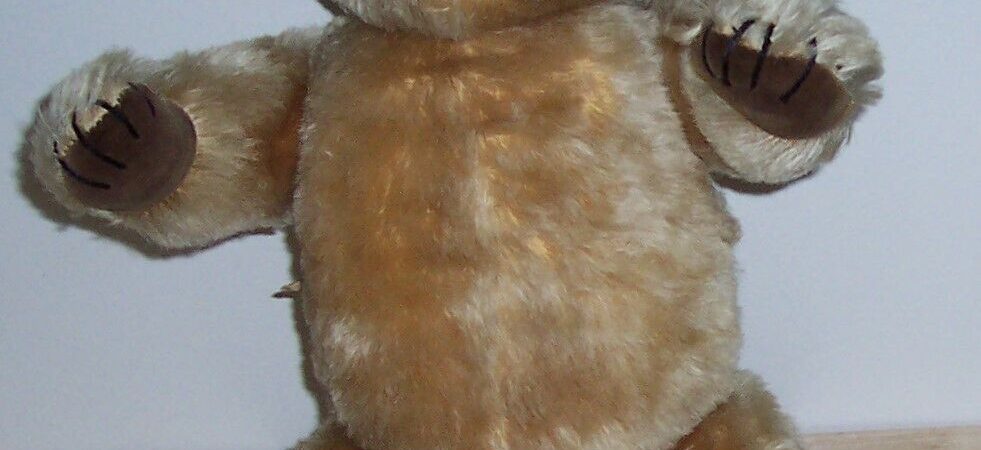
In the world of teddy bears, few names hold the same weight and nostalgia as Chad Valley. For over a century, these cuddly companions have brought joy and comfort to children and adults alike, becoming treasured heirlooms passed down through generations.
-
The Enduring Allure of Vintage Teddy Bears: A Journey Through Time and Cuddles
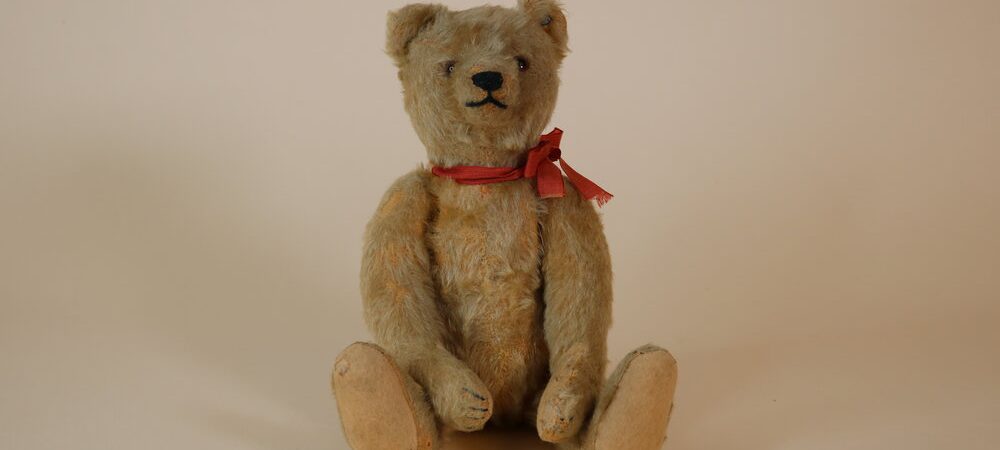
Teddy bears, those timeless companions of childhood, hold a special place in our hearts. But there’s something undeniably magical about vintage teddy bears. They’re not just toys; they’re portals to the past, each stitch and button whispering tales of bygone eras. In this article, we’ll delve into the captivating world of vintage teddy bears, exploring…
-
Teddy Hermann: Where Tradition Meets Cuddles
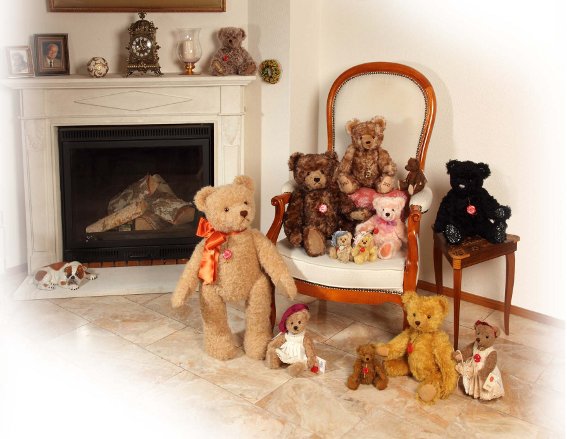
In the plushy realm of teddy bears, few brands stand out like Teddy Hermann. Founded in 1905 by Margarete Steiff‘s nephew, Bernhard Hermann, Teddy Hermann has carved a unique niche with its dedication to traditional craftsmanship, high-quality materials, and timeless designs. Each bear, meticulously handcrafted in Germany, carries a legacy of over a century, whispering…

Total stores showing: 22





Some Teddy Bear History
Teddy bears are among the most cuddled and much loved of youngsters buddies, however they are fairly new in the wonderful world of toys. The story of their origins are just about the most well-known. When President Theodore “Teddy” Roosevelt failed to make a kill on a hunting journey in November of 1902, his companions captured a bear cub and tied it to a tree to provide him a unmissable target. The President wouldn’t take the shot. Rather, he proclaimed, “Spare the bear! I’ll not shoot a tethered animal.” Washington Post writer Clifford K. Berryman immortalised the picture when he drew it in a political cartoon for the paper. Soon after, Brooklyn store proprietors Rose and Morris Michtom produced a stuffed bear doll, known as “Teddy’s Bear,” and positioned it in their shop window with the cartoon. The bear was a hit, and prompted the Michtoms to discovered the perfect Novelty and Toy Company.
Subsequently, about the same time in Germany, Richard Steiff made a soft plaything bear for his aunt, Margarete Steiff, who operated a large toy factory. Steiff’s concept for the bear, known as a Bar 55PB, originated from his drawings of the creatures at the Stuttgart Zoo. An United states wholesaler, George Borgfeldt, found out about it at the Leipzig Toy Fair in 1903, and immediately purchased three thousand of these. By WWI, Steiff had sold an incredible number of these toys in the usa, England and Germany. Steiff bears produced between 1903 and 1905 are the most-desirable today. They feature humpbacks, long snouts, long hands with curved paws, and large tapered feet-after 1905, the trademark Steiff button was sewn to their ears.
The earliest Ideal teddies, which may also be highly valued, look completely different; they have triangular in shape faces, chubby bodies, and long straight arms and legs. The peak of teddie production was between 1906 and 1908, during Roosevelt’s 2nd term. Alongside regular bears, producers developed novelty models, just like the 1907 Laughing Roosevelt Bear by the Columbia Teddy Bear Business, which highlighted the president’s big teeth. The 1917 Patriotic Bear, produced during WWI, was red, white, and glowing blue and had electric lights for eyes. Before WWII, numerous new teddy-bear manufacturers started production. In Germany,
Bing produced mechanised bears while Schuco produced tiny bears. Hermann bears out of this period are also collectable. In the UK, Dean’s began producing bear toys in 1915, while Merrythought entered the industry in 1930. J.K. Farnell made the initial “Winnie the Pooh” purchased for Christopher Robin in 1921. Additional early-century teddy-bear makers consist of Harwin & Co., William J. Terry, Chad Valley, and Chiltern in England; Knickerbocker, Aetna, Bruin and Gund in the usa; and Joy Toys in Australia. Following the war, the U.S. marketplace was plagued with inexpensive plush toys from Chinese production facilities. By the finish of the ’60s, the original teddy bear appeared to be on the brink of extinction. However when teddy bear collector Peter Bull released his 1969 book on his preoccupation, fascination with old-fashioned bears increased. Christie’s hosted the initial auction specialized in antique and vintage teddies in 1985, exactly the same year the Teddy Bear Performers Guild was established in the usa. As a result of the fascination with old style teddy bears, there are a great number of deliberate reproductions available. They often feature components of the old teddies, like long arms, back humps, and straw stuffing, however in the wrong combinations, they appear suspiciously unauthentic. Knowing the features of antique bears may help you distinguish the knockoffs. As an example, vintage teddies were most often crafted from wool mohair. Silk plush bears were introduced around 1930, but cotton plush wasn’t used until after WWII and synthetics did not show up before the 1950s. The initial bears have boot-button eye. In the 1920s, glass eye had become the most prevalent, during the 1950s eyes were manufactured from plastic. Each company had its distinctive nose stitching-earlier noses had been sewn out of woven silk. The earliest antique teddies are hard-filled with excelsior, also called wood wool. If a antique bear is light, it had probably been filled with fibers from the kapok tree. Bears filled up with foam are modern. Are you aware that paws, the ones on classic bears had pads manufactured from felt or cotton, even though cotton would have worn out by now and been replaced. Velvet and rexine (a phony leather) were also useful for paw pads beginning in the late 1930s.